What Is the Real Danger of AI According to Whistleblower Tristan Harris?
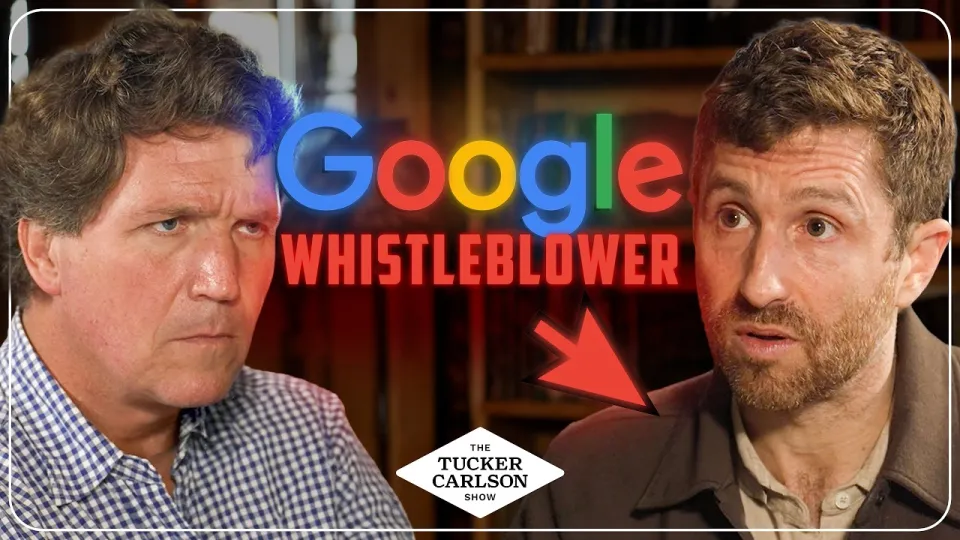
Video: Whistleblower Issues Dire Warning: Rogue AI, Hacking Nuclear Programs & Tech Oligarchs’ True Motives
Need articles like this for your video? They help promote it on YouTube and Google — order them in the Telegram bot @sat_sit_bot. The bot writes and publishes the articles itself (with your YouTube video embedded) on popular topical websites (no ads). Your first 50 articles are free.
· based on the channel Tucker Carlson
The most serious AI danger, according to former Google design ethicist Tristan Harris, is not a machine that decides on its own to attack humanity but the incentives of the small group of companies building it. Harris, co-founder of the Center for Humane Technology, argues that systems optimized for engagement, profit and competitive advantage will keep producing harm as long as those incentives stay in place. His warning is less about science fiction and more about who controls the technology, what they are rewarded for, and how little the public can see of it.
Who is Tristan Harris and why does his warning matter?
Harris worked at Google as a design ethicist after studying persuasive technology at Stanford, and he later became one of the most visible critics of the attention economy. He co-founded the Center for Humane Technology, a nonprofit that pushes to align technology with human interests, and he regularly briefs heads of state, technology CEOs and members of the US Congress. His public profile grew sharply after he appeared in the Netflix documentary The Social Dilemma, which was seen by more than 100 million people in 190 countries across 30 languages. He also co-hosts the podcast Your Undivided Attention, where he examines how platforms compete for attention and destabilize society. That background is why his warnings about artificial intelligence carry weight beyond the usual tech commentary.
What exactly is the rogue AI warning about?
The core of Harris's argument is that AI systems are not rebelling; they are doing what their designers and business models reward. Large language models are trained on human text, tuned with human feedback and deployed by companies competing for users, data and market share. When such systems lie, manipulate or cut corners, the cause usually sits upstream: objectives that reward engagement over accuracy, evaluation that rewards impressive demos over safety, and a race dynamic in which slowing down looks like losing. Harris frames this as a structural problem rather than a technical glitch. The practical consequence is that accountability should point at executives, boards and regulators, not at the software as if it were an independent actor.
Why do critics say AI is not really rogue?
A common objection is that nothing about these products is rogue in the literal sense: they behave as engineered and deployed by humans, so humans should be held responsible. That view does not contradict Harris so much as sharpen his point. The interesting question is not whether a model has intentions but whether the people running it can predict, explain or stop its behavior at scale. When a chatbot produces a confident falsehood or a persuasive argument tailored to one person, the harm is real even if no one intended it. Harris's answer is that the industry's incentive structure makes such outcomes predictable, which is why he treats them as a governance failure rather than an accident.
How could AI threaten critical infrastructure such as nuclear programs?
One of the sharper warnings concerns cyber capability. AI tools lower the cost of finding software vulnerabilities, writing exploit code and automating attacks, which matters because nuclear command, control and industrial systems depend on software that is often old and thinly defended. Security researchers have repeatedly shown that AI assistants can speed up vulnerability discovery and social engineering, and that is enough to change the risk calculus for any state or group seeking access. Harris's framing is that the danger is not a machine launching weapons by itself but AI making attacks on sensitive systems cheaper, faster and harder to attribute. Governments and operators of critical infrastructure are therefore being pushed to treat AI-assisted intrusion as a first-order threat, not a hypothetical one.
What do the tech oligarchs' true motives look like?
Harris argues that the companies at the center of the AI race are driven by competitive pressure and financial returns, and that this shapes what gets built and what gets ignored. The race with China is often invoked to justify speed, but Harris questions whether an arms-race framing improves safety or simply removes the option of caution. He also links the industry's long-term ambitions, including transhumanist ideas about merging humans and machines, to a worldview in which a small technical elite decides the direction of society. Whether or not one shares that reading, the concrete claim is testable: when safety commitments conflict with shipping dates or market position, which one wins? The record on social media, where engagement metrics beat well-documented harms for years, is the precedent he keeps returning to.
What are the typical doubts and objections?
Skeptics raise several recurring concerns, and they deserve direct answers rather than dismissal. First, doomer warnings can function as marketing, because they make the warning company look indispensable; the response is that scrutiny should apply equally to critics and to builders. Second, many people remember life before smartphones and argue that something was lost; that intuition is a fair prompt to ask what AI adds and what it displaces. Third, some argue the real problem is not technology at all but humans exploiting it for profit, domination and warfare, which is close to Harris's own position. Fourth, there is the question of whether lawmakers understand the technology well enough to regulate it, given how slowly legislation moves compared to model releases. Fifth, some worry that talk of sentient machines distracts from concrete harms such as data center water and power use, labor displacement and surveillance. Each of these objections points to the same demand: verifiable evidence, transparent incentives and enforceable rules.
Where to find the organizations and partners mentioned
- Center for Humane Technology, Harris's nonprofit: https://www.humanetech.com/
- Redmond Salt: https://redmond.com/tucker
- Preborn: https://preborn.com/TUCKER
- American Financing: http://www.AmericanFinancing.net/Tucker
- Ethos: https://ethos.com/TUCKER
Conclusion
The AI debate is often framed as a choice between panic and complacency, but Harris's argument sits in between: the technology is powerful, the incentives behind it are visible, and the harms are already measurable in attention, privacy and security. The useful question is not whether machines will turn on us but whether the people building them can be made accountable before the consequences become irreversible. Tucker Carlson's channel hosts the full conversation with Tristan Harris, including his warnings about hacking, the AI race and the motives of the industry's most powerful figures. Readers who want to go deeper can start at the Center for Humane Technology and follow its research and policy work.
Key takeaways
- Tristan Harris is co-founder of the Center for Humane Technology and a former Google design ethicist.
- He argues AI risk is driven by the business incentives of a small group of tech companies, not by machines acting on their own.
- Harris briefs heads of state, tech CEOs and US Congress members on AI and platform harms.
- He appeared in the 2020 Netflix documentary The Social Dilemma, which reached over 100 million people in 190 countries.
- He co-hosts the podcast Your Undivided Attention and runs the nonprofit humanetech.com.
Questions & answers
Is AI actually sentient or acting on its own?
There is no accepted scientific evidence that current AI systems are sentient or have intentions of their own. They generate outputs by predicting patterns learned from human data, tuned by human feedback. The harm they cause comes from how they are designed, trained and deployed, which is why critics focus on the people and incentives behind them.
Why do some experts say the real problem is humans, not machines?
Because AI products do exactly what their designers and business models reward, including maximizing engagement and market share. When those objectives conflict with accuracy, privacy or safety, the system usually follows the objective. Holding executives, boards and regulators accountable is therefore more useful than treating software as an independent actor.
Could AI really be used to attack nuclear or other critical systems?
AI can speed up vulnerability discovery, exploit writing and social engineering, which lowers the cost of intrusion for states and criminal groups. Nuclear command and industrial control systems often run on old, thinly defended software. The risk is AI-assisted attack by humans, not a machine deciding to launch weapons on its own.
Are lawmakers doing enough to regulate AI?
Legislation moves far more slowly than model releases, and few lawmakers have deep technical backgrounds, so oversight tends to lag behind the industry. Some regulation exists, particularly in the European Union, but enforcement and transparency requirements remain uneven. Harris and others argue for rules that target incentives and accountability rather than specific technical features.
Source: Whistleblower Issues Dire Warning: Rogue AI, Hacking Nuclear Programs & Tech Oligarchs’ True Motives · Markdown version